



The European Society for Organ Transplantation (ESOT) reaffirms its mission to protect patients living with, or in need of, life-sustaining therapies for end-stage organ disease, and to uphold the ethical foundations of medical care, regardless of geography, nationality, or political context.
In situations of armed conflict, international humanitarian law mandates all parties to respect and protect the wounded and sick, healthcare personnel, and medical facilities. Attacks against hospitals, ambulances, and healthcare workers constitute grave breaches of the Geneva Conventions.
Current Humanitarian Concerns
Since ESOT’s previous statement in October 2023, the humanitarian situation in several conflict zones has deteriorated further. In particular, the destruction of healthcare infrastructure, loss of medical personnel’s lives, and disruption of essential services reported in Gaza illustrate the extreme vulnerability of patients dependent on continuous and specialised medical care.
These realities are not unique. Armed conflicts in other regions have also devastated healthcare systems, leaving patients with chronic and end-stage organ disease without access to dialysis, complex medical support, medications, or viable referral pathways. The erosion of medical neutrality threatens the survival of the most vulnerable patients across these conflict zones.
Reports from international humanitarian organisations document repeated and sustained attacks of hospitals and clinics infrastructure, the killing or displacement of healthcare workers, and severe constraints on medical supply chains. When healthcare systems collapse, patients requiring advanced or sustained medical care face life-threatening consequences.
Call to Action
In light of these ongoing and escalating concerns, ESOT calls upon all parties and stakeholders to act in accordance with humanitarian principles:
- Respect for Humanitarian Law and Protection of Civilians. All parties in armed conflicts must comply with humanitarian laws, including the obligation to protect civilians, the wounded and sick, and those providing medical care.
- Protection of Healthcare Personnel and Facilities. Healthcare facilities and personnel are neutral and must never be targeted, militarised, or obstructed. Their protection is essential to preserve life and human dignity.
- Unhindered Access to Medical Aid. Safe, sustained, and unhindered access for medical personnel, patients, and humanitarian supplies must be guaranteed, including the protection of humanitarian corridors required to maintain essential healthcare services.
- Restoration and Strengthening of Healthcare Systems. Beyond emergency response, there must be a commitment to restoring healthcare infrastructure, supporting local healthcare professionals, and rebuilding essential services for patients with chronic and end-stage organ disease.
- Constructive Dialogue and Humanitarian Space. Governments and international bodies must engage in constructive dialogue aimed at peaceful and sustainable resolutions, ensuring that humanitarian actors can operate without intimidation or interference.
A Commitment Rooted in Humanity
ESOT reiterates that this statement is strictly humanitarian in nature. The Society does not take political positions and bases its appeal on universally recognised principles of human rights, medical ethics, and international humanitarian law.
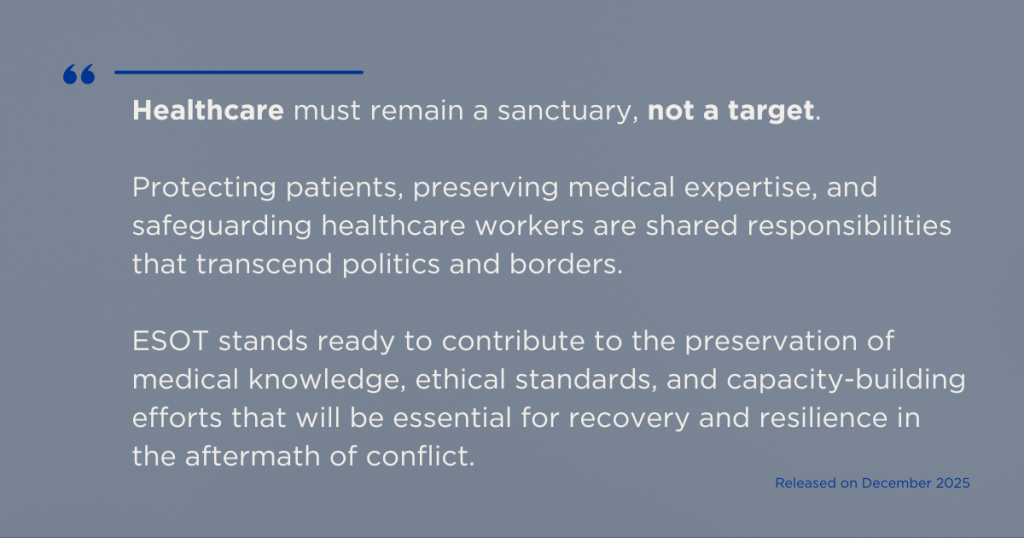
Healthcare must remain a sanctuary, not a target. Protecting patients, preserving medical expertise, and safeguarding healthcare workers are shared responsibilities that transcend politics and borders. ESOT stands ready to contribute to the preservation of medical knowledge, ethical standards, and capacity-building efforts that will be essential for recovery and resilience in the aftermath of conflict.